







In this blog, Laura Rognoni reflects on key discussions from the Connected TV World Summit in London, where NAGRAVISION hosted a panel on content discovery and the value of the user interface. From AI-driven discovery to the battle for the home screen, the conversations revealed an industry that already has the technology to solve many of its biggest challenges — but is still figuring out how to use it.
Two days inside the fantastic two-story venue at King’s Cross for this year’s Connected TV World Summit, and one theme stood out. For the past decade, the streaming industry has focused relentlessly on content supply —bigger libraries, bigger originals, bigger rights deals. But the real challenge in 2026 is no longer supply — it’s confidence. Confidence in how to guide viewers through an overwhelming universe of content. Confidence in new discovery technologies like AI and large language models. And confidence in who ultimately controls the user’s experience and the relationship with the viewer.
Consultancy Fifty5Blue captured the mood neatly when they described the industry’s task as “finding clarity in the noise.” As expected, the familiar themes were certainly there this year: fragmentation, subscription fatigue and competition for attention, but beneath those discussions sat a more fundamental question: Who controls the experience of watching TV today?
The Rabbit Hole of Fandom
One of the most interesting debates revolved around a deceptively simple question: what matters more, great content or great discovery? A few years ago, that question would have been self-evident, because content was the strategic centrepiece. Today, the economics of streaming are shifting. Subscription OTT has doubled over the past decade, yet growth per household is slowing as viewers reach the limit of how many services they are willing to add. At the same time, attention is spreading across a broader entertainment landscape that includes long-form streaming, social video, gaming and podcasts.
David Salmon from Tubi described the opportunity well, suggesting that platforms should enable viewers to “go down the rabbit hole of fandom.” The goal is not simply to recommend a single title, but to open the door to entire worlds of content that audiences care about. This becomes particularly powerful when intellectual property expands across formats. A successful story rarely stays confined to a single medium anymore: a video game becomes a TV series, the TV series inspires podcasts or spin-offs, and the broader ecosystem creates multiple ways for audiences to stay engaged. Discovery systems that help viewers move naturally across these worlds are where long-term value is increasingly created. At the same time, discovery cannot compensate for weak content supply. Thijs Bijleveld from IMAX wryly reminded us that “shopping in an empty supermarket is useless.” Indeed, discovery and content supply are two sides of the same equation.
Playing By Their Own Rules
Artificial intelligence and Large Language Models were frequently discussed as potential tools to improve discovery. LLMs are already being used to enhance search, recommendations and personalization, allowing platforms to interpret vague queries such as “what’s popular tonight” or “give me something easy to watch.”
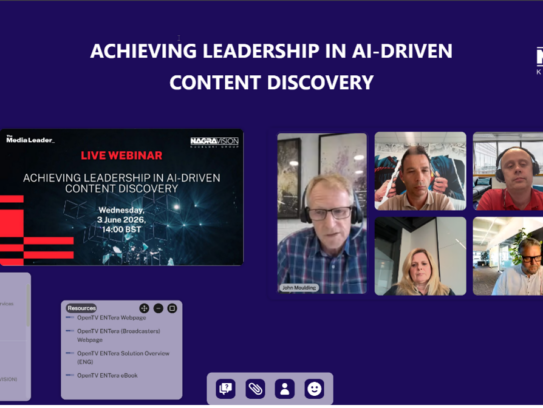
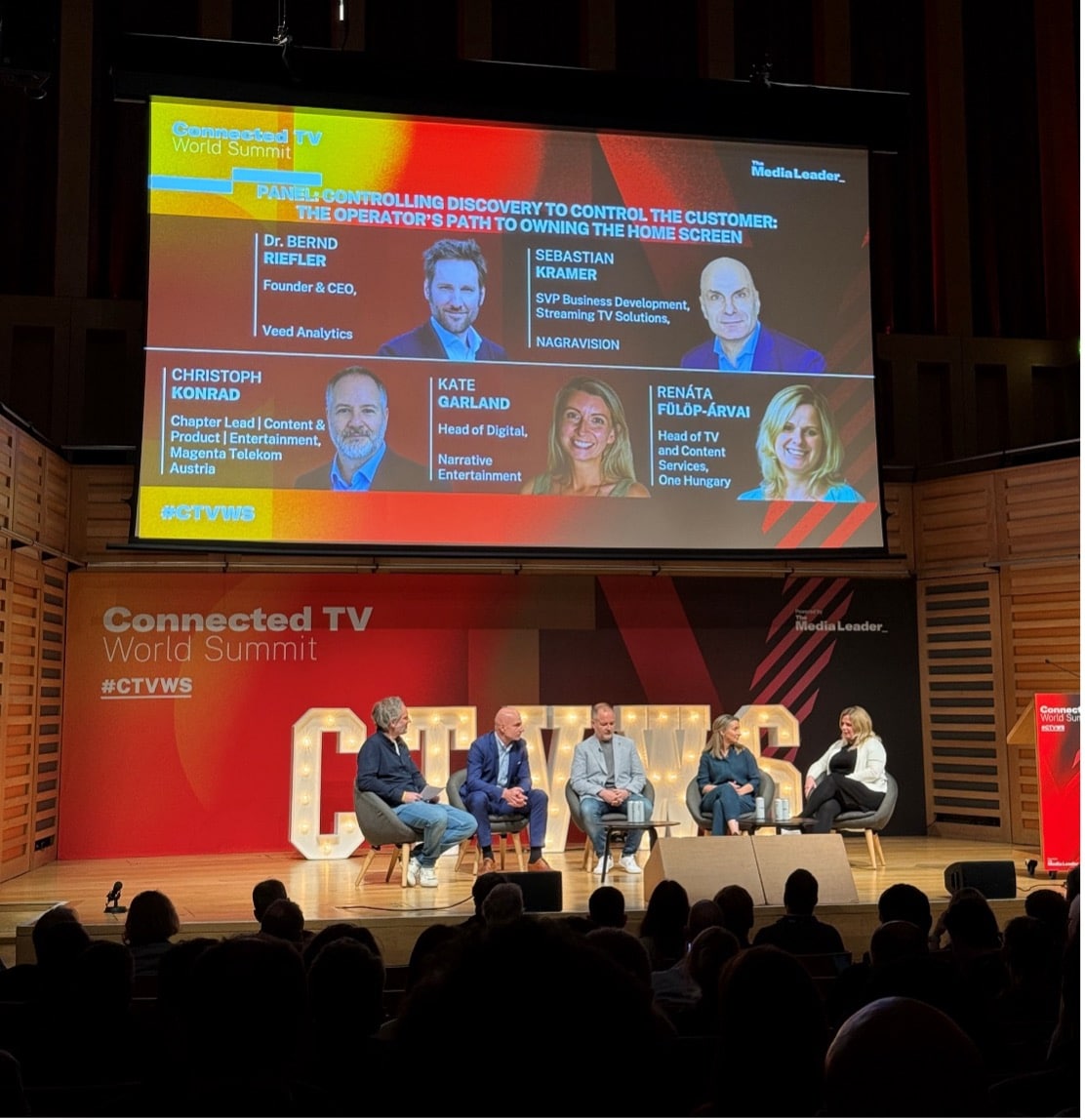
However, the model alone is not enough. Context, metadata and ecosystem collaboration are what ultimately allows these systems to function reliably. These broader themes came together during NAGRAVISION’s panel session, hosted jointly with Magenta Telekom, One Hungary and Narrative Entertainment. Our discussion focused on a strategically critical question, “Who owns the home screen?”
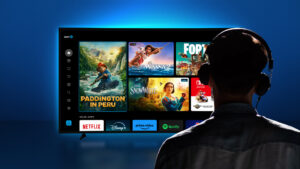
Whoever controls the home screen ultimately shapes how content is discovered. For operators such as Magenta Telekom and One Hungary, maintaining that control remains critical. As NAGRAVISION’s SVP Sebastian Kramer highlighted during the discussion, operators increasingly want to guide the user experience themselves rather than becoming guests inside someone else’s ecosystem, whether that ecosystem belongs to a smart-TV manufacturer or another platform provider. But practically, how easy is that to achieve?
Owning the Experience
In many markets, this is also why the set-top box continues to play an important role. Broadcast television still represents a large share of viewing in several regions, and the set-top box remains the gateway into the household. Owning that gateway means retaining control over the customer relationship and the discovery journey. Insights shared during the summit reinforced this point. Deutsche Telekom noted that around 80 percent of its customers still use a set-top box, highlighting that controlling the entry point into the living room continues to hold significant strategic value even as smart-TV platforms grow.
From the content side, the perspective was slightly different but equally revealing. Broadcasters such as Narrative Entertainment emphasized the importance of partners who can provide visibility to the home screen and access to the audience insights behind it. For broadcasters operating within operator platforms, understanding how viewers navigate the interface is incredibly meaningful in allowing them to refine how content is presented and tailor discovery journeys. Especially given audiences rarely think in terms of genres or categories when deciding what to watch. Instead, they think in situations and moods, and delivering the right content in those moments requires more than large libraries. It requires contextual discovery and collaboration across the ecosystem.
Where Next?
If there was one idea that stayed with me after leaving King’s Cross, it’s that the streaming industry may be entering a new phase. The technology already exists: AI-driven discovery, contextual recommendations, unified content aggregation. What operators are now figuring out is how to deploy those capabilities with confidence while maintaining control of the viewer experience. In other words, the future of streaming will not be about creating more content, but about using technology to guide audiences through it with clarity and confidence — shaping experiences around viewers, rather than asking viewers to adapt to the platforms.
And who knows —by 2027, will the Connected TV World Summit, as was suggested during the event, become the Entertainment Discovery Summit?
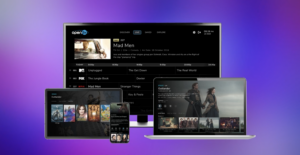
To learn more about the topics discussed on our panel and OpenTV ENTera, the next-generation streaming solution used globally by operators such as One Hungary, visit our website or get in touch. We’d love to continue the conversation!